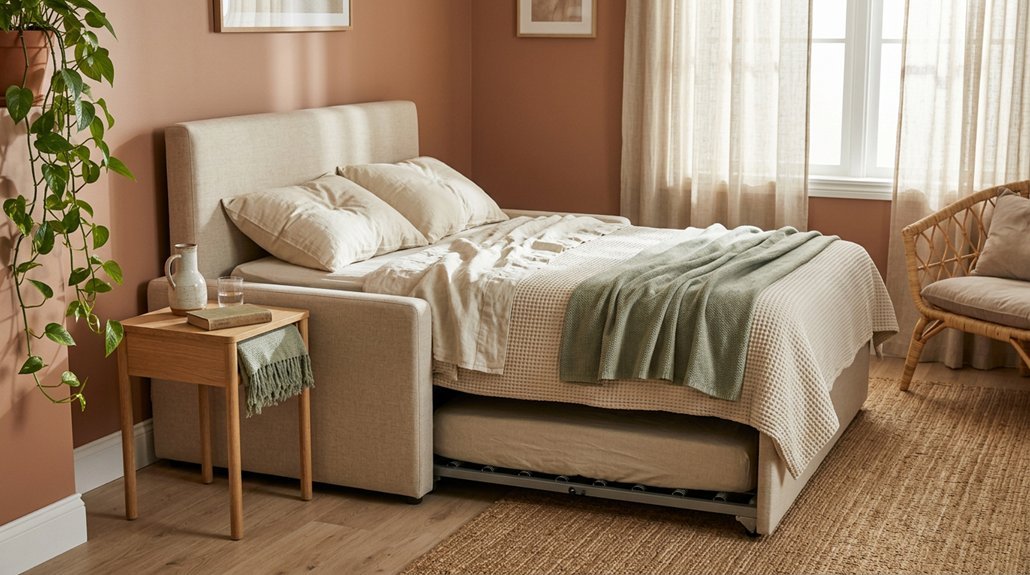
Many headboards use two vertical mounting legs called struts rather than attaching directly to the mattress or box spring. You’ll need to check whether those legs match your frame’s bracket spacing and pre-drilled holes before buying hardware.
Most setups require bolts, washers, and nuts, while platform, metal, or adjustable frames may need adapters. Keep the headboard upright, align at least two holes per bracket, and tighten connections evenly.
Mismatched frames may need a wall-mounted or freestanding solution.
How Do Headboards Attach to Bed Frames?
Most headboards attach to standard, platform, or adjustable bed frames through matching brackets, mounting legs, and pre-drilled holes. To attach a headboard, move your bed away from the wall, then center the headboard behind it. Align the headboard brackets and mounting legs with the bed frames’ mounting points, and lift the headboard until it reaches your preferred height.
Insert bolts through matching holes, add washers and nuts, then tighten the mounting hardware snugly while periodically checking alignment. This connection usually provides firm support, although missing brackets or holes may require an adapter system.
If your frame offers no suitable attachment points, you could choose a wall mounted headboard or free-standing headboard instead. These alternatives may simplify installation, but they require stable wall fasteners or adequate floor support.

Use this 304 Stainless Steel hardware set to easily attach your bed frame to a headboard or footboard. The headboard bolts and nuts kit can fit for many different things,...
Check Headboard and Frame Compatibility
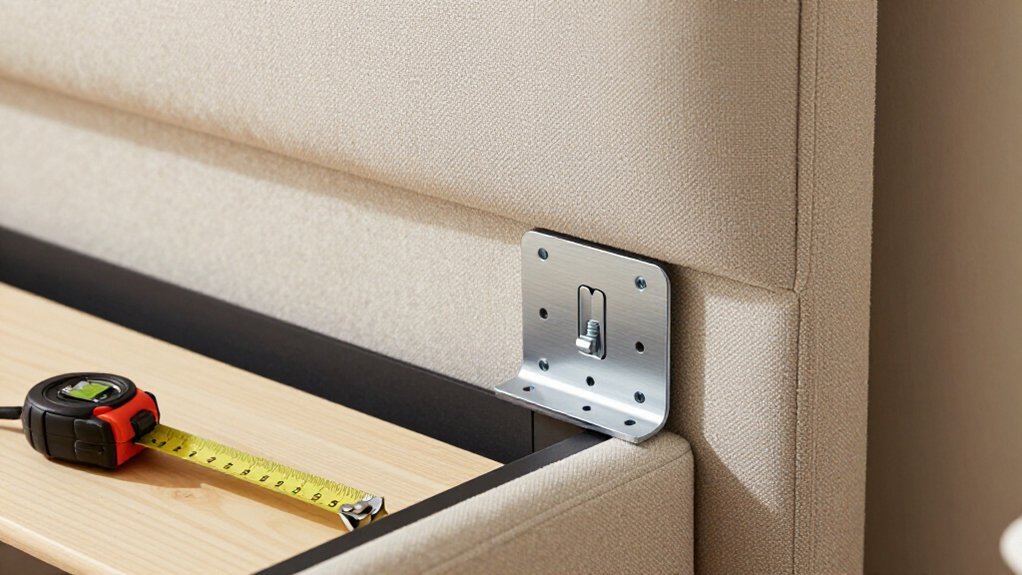
Match your headboard’s width and mounting-hole spacing to the frame before buying, so the legs or struts align securely.
Inspect the frame’s brackets and pre-drilled holes, because platform and adjustable beds may require universal adapter brackets.
If the mounts don’t align, you’ll need a freestanding or wall-mounted headboard instead.
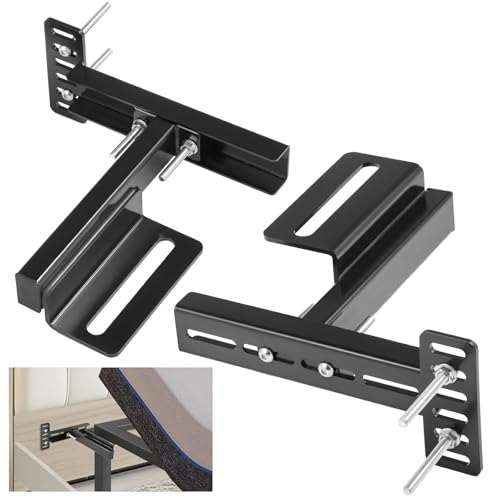
Friendly suggestion, before you buy our headboard bracket kits, please confirm in 3 steps. Step 1: Confirm if your adjustable bed comes with a headboard bracket kits or not , if not, then you should check the frame to see if the base can fit a separate headboard bracket kits or not. Step 2: Check the description to see the type/name of compatible brackets. Step 3: Confirm if there are existing holes in the headboard, if not, confirm if you can drill holes, and also check if the frame size is suitable for the size of our bracket. Then decide to buy our bracket.

Sturdy Construction: Built with durable steel for long-lasting use, ensuring your headboard stays securely in place.

Function: The Bed Modification Plate help connect a bigger size bed frame to a small size headboard;or connect a smaller size bed frame to a big size headboard.Basically suitable for various sizes bed frame and headboard
Match Sizes and Mounts
Before buying, confirm that the headboard’s width matches the bed frame and that its legs align with the frame’s mounting positions. Measure the distance between mounting holes, because matching sizes alone won’t guarantee a secure fit.
Make sure the headboard legs center over the frame’s bracket holes. Confirm each bracket provides at least two aligned bolt holes. Check whether adapters are required before planning installation.
A headboard to a bed usually attaches through factory-drilled holes or slots near the frame’s top. However, not every design can attach to any bed. Metal, platform, and adjustable frames may use different spacing, while casters or upholstery can affect clearance.
If your frame lacks brackets, choose an adapter bracket, wall-mounted model, or freestanding headboard instead. Check the manufacturer’s measurements, materials, and weight limits, then verify alignment before starting the installation process. Proper matching reduces movement and prevents unsafe loading during use.
Inspect Brackets and Holes
Inspect the frame’s head end for built-in brackets or pre-drilled holes and slots, which determine whether the headboard can attach securely. To inspect brackets and holes, measure their horizontal spacing, then compare it with the headboard’s expected mounting locations before attaching a headboard. Verify the headboard is still compatible by checking that its legs or mounting struts align centrally with each bracket opening. If the frame uses holes or slots, ensure each leg reaches at least two bolt locations per bracket for stable support.
Elongated holes arranged vertically can provide useful height adjustment, but they won’t correct mismatched widths. If the frame lacks mounting hardware, you may need universal brackets or wall studs, depending on the headboard’s weight and upholstery. Check bolt diameter, bracket strength, and clearance around casters before installation.
Match Headboard Hardware to Your Frame
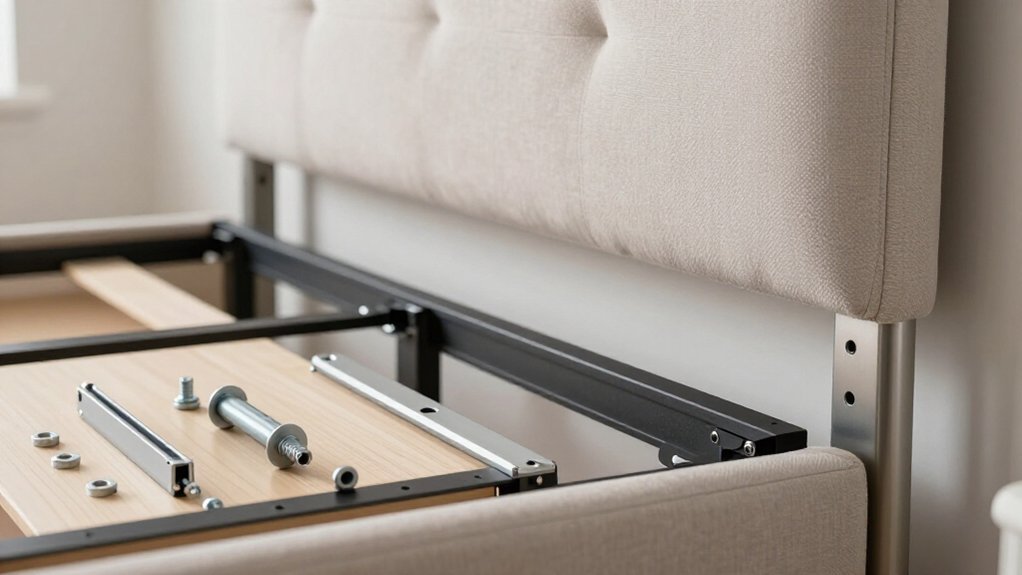
Check whether your frame has pre-drilled holes or slots, then match them to the headboard legs’ bolt pattern.
Center each leg, align at least two holes per bracket, and select compatible bolts, nuts, and washers for secure attachment.
If the frame lacks mounting points, you should choose a wall-mounted or freestanding headboard instead of using incompatible hardware.

Suitable for bed frames, bed rails, headboards, footboards, bed posts, bunk bed ladders, new wood frames, existing wood frames and other wooden furniture.Applicable when the lateral distance between the bed frame and headboard is less than 6.3 inches

【Versatile Brackets】NINESTYLE headboard brackets are built to attach bed frame headboard,extension brackets are compatible with bolt-on footboard to fit for twin full queen and king size bed base.

ADJUSTABLE (FRONT/BACK & LEFT/RIGHT) -Our headboard brackets support free movement in both front/back and left/right directions, allowing you to adjust instantly according to your bed frame length and headboard width. Perfectly fits any bed type, such as Twin, Full, Queen, or King
Check Frame Compatibility
How your headboard attaches depends on whether your bed frame’s mounting points match its hardware and spacing. Before you buy, inspect the back of the headboard and your frame’s head-end holes, slots, or brackets. Measure the distance between each mounting point, then compare it with the headboard’s legs or mounting brackets.
A Metal Bed Frame often includes end holes, making attachment straightforward, while platform beds may lack compatible openings. Your options depend on the type of frame and how the headboard is designed.
- Confirm the frame’s holes align with the headboard’s bolt-through legs or struts.
- Check whether existing brackets support the headboard’s required spacing.
- Choose a freestanding or wall-mounted headboard if alignment fails.
Don’t force an incompatible connection, because loose hardware can damage upholstery, casters, or the frame. A headboard can be attached to a bed frame or wall, depending on compatibility.
Select Suitable Hardware
Select hardware that aligns with both your headboard’s mounting system and your bed frame’s available holes, slots, or brackets. Review pre-drilled mounting holes/slots near the head, especially on a metal frame, and confirm the included bolts, washers, nuts, brackets, or struts fit.
For a headboard to a metal or platform frame, use bolt-on hardware that supports its legs. Center oblong-slot mounts, line up each leg with at least two holes per bracket, then tighten fasteners securely with a wrench or pliers. Avoid overstraining the frame, casters, or upholstery.
Headboard to the wall systems require suitable wall anchors, while freestanding headboards need stable floor support rather than frame bolts. Hidden clips work only when the substrate supports their specified range. Mark positions carefully, align male and female clips, and verify they engage with an audible click. Thus, headboards can be fastened securely only with compatible hardware.
Attach a Headboard Step by Step
Move the bed away from the wall, locate the pre-drilled holes or slots near its head, and prepare the frame for installation. This Step-by-Step Guide works for a freestanding Headboard; a wall-mounted headboard follows different requirements.
- Center the headboard behind the bed, aligning its mounting legs with the frame’s holes near the head.
- Lift it to the desired height, then insert bolts through the legs and brackets.
- Add washers when bolts extend beyond the legs, thread on nuts, and tighten them snugly.
Repeat the process at every mounting location, checking that the headboard remains centered with the bed base. You’ll need to use a wrench or pliers for final tightening. Ask someone to help support heavy upholstery or solid-wood panels.
Don’t overtighten, because excessive force can damage hardware, brackets, or the frame. Recheck stability before moving the bed back against the wall.
Install Headboards on Platform, Metal, and Adjustable Beds
Metal frames often provide the simplest installation, because pre-drilled holes accommodate compatible headboard legs, brackets, bolts, washers, and nuts. Move the bed and the wall apart, center your headboard, then tighten each fastener with a wrench. Metal bed frames typically support straightforward assembly, although casters, rail spacing, and hardware sizes can limit compatibility.
A platform bed may include attachment points, but platform beds without suitable holes usually need universal adapter brackets and pilot holes. Check each bracket’s weight rating before installation, especially with heavy upholstery or solid-wood construction.
Adjustable beds require compatible slots or brackets near the head, allowing the headboard to remain centered while the bed changes position. If holes don’t line up, don’t clamp the headboard; choose compatible hardware, or use a wall-mounted or freestanding design instead.
Fix a Loose or Misaligned Headboard
A loose or misaligned headboard usually needs careful repositioning, hardware checks, and even tightening rather than replacement. Move the bed away from the wall, then keep the headboard upright while checking its legs against the frame’s bracket positions. This method works for a standard bed, traditional headboard, or headboard attached to any bed with compatible hardware.
- Align each strut with the pre-drilled slots, engaging at least two holes per bracket.
- Lift the headboard to the correct height, re-center it, and insert bolts gradually.
- Add washers when bolts extend beyond the legs, then tighten evenly with a wrench.
Press the headboard firmly against the frame before final tightening, because uneven pressure can create wobble. If the mounting pattern doesn’t match, the frame may not support this headboard using its existing brackets. Verify compatibility before forcing hardware.
Use Wall-Mounted or Freestanding Alternatives
When your bed frame lacks compatible brackets or holes, consider a wall-mounted or freestanding headboard instead of forcing unsuitable hardware. Wall-mounted headboards attach directly to an appropriate wall, using studs or rated anchors, so measure mattress height carefully before installation. They create a clean, floating appearance, but they won’t move easily and may damage drywall.
Freestanding headboards stand between the bed and wall, relying on the bed to keep them upright rather than using bolts. Position the finished side toward your sleeping area, and adjust placement until the mattress aligns comfortably. Keep the unit away from the wall only if its design allows stable positioning.
If you’re converting a headboard to a platform bed, verify width, height, and clearance first. Choose a different headboard if casters, thick upholstery, or unstable flooring prevent secure support.

Application :The headboard brackets are used for attaching a 14,16,18inches metal platform bed frame.But it should be noted that when the bottom mounting holes on the headboard is less than 10.6inches from the bed frame
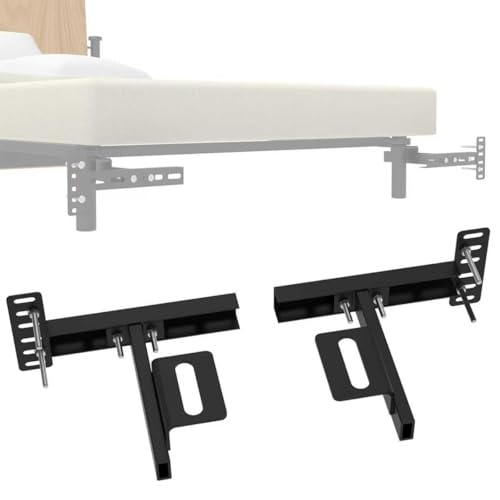
Suitable for various types of beds: Designed to fit Twin, Full, Queen, and King size beds, these adjustable headboard brackets feature multiple slots for customized width and distance, ensuring seamless attachment to most metal bed frames and headboards.

FULL TO QUEEN CONVERSION KIT: Aligns a Full headboard with a compatible Queen metal bed frame, or the reverse. It adjusts headboard mounting points only and does not change the mattress support area.