A sofa is a silent witness to thousands of years of your life, yet its lifespan remains stubbornly unpredictable. You might expect a decade of service, but that expectation crumbles without attention to frame construction, foam density, and daily use patterns.
Budget models with particleboard frames and 1.8 lb/ft³ foam often fail in three to five years, while kiln-dried hardwood and 2.0+ lb/ft³ cushions can stretch toward twenty.
The real question isn’t how long sofas last, but why yours might not.
How Long Should a Sofa Really Last?
You can expect most sofas to hold up for about 7 to 15 years, with the typical lifespan landing around 10 years in the US under normal daily use. Budget couches typically deliver 3 to 5 years, while mid-range models reach 7 to 12, and solid hardwood frames with quality foam can stretch 12 to 20 plus years.
So how long do sofas truly endure? It depends on construction, cushion density, and daily wear.
Foam under 1.5 lb/ft³ flattens in 1 to 3 years, while 2.0 plus lb/ft³ resists compression for 7 to 10 plus years. Leather and performance fabrics resist abrasion, but corner cushions still degrade where compression concentrates. Signs it’s time include sagging, creaking frames, and permanent upholstery impressions.
With rotation and proper upkeep, you’ll maximize average lifespan and delay replacement.
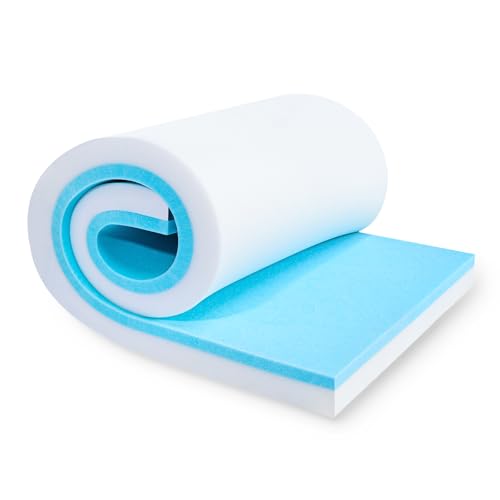
Memory Foam Pad: Constructed from 0.8-inch blue memory foam bonded to a 1.2-inch foam support layer, this pad combines high-quality materials to deliver enhanced performance. The memory foam exhibits slow rebound and gradual pressure release characteristics, providing effective cushioning and optimal load distribution for upholstered applications

2-in-1 Design for Versatility: This large stability cushion (16 x 13.5 x 2 inches) functions as both a balancing cushion and a knee pad, making it ideal for yoga, pilates, or fitness routines that require extra joint support.

What You Will Get: the package comes with 2 pieces of high density upholstery foams in black color, adequate in quantity to meet your daily use and replacement demands
Why Did My Couch Fail at 18 Months?
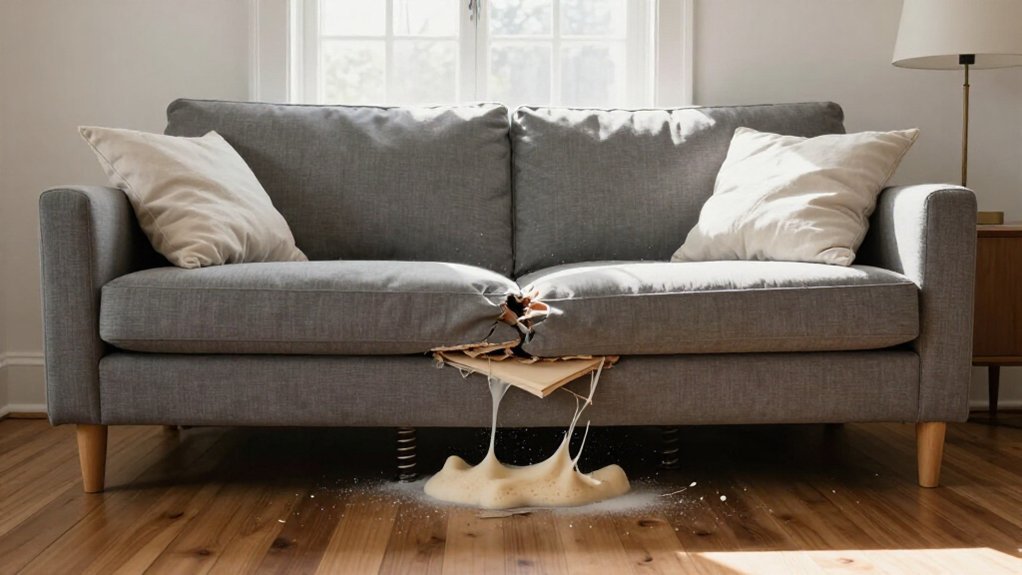
A sofa failing at 18 months sits far below the 7 to 15 year benchmark most manufacturers reference, and that gap usually signals a construction problem rather than heavy use. You might hear “wear and tear” blamed, but couches typically last a decade when built properly, so premature failure points to material defects.
Check your cushions: if they’ve lost shape despite daily flipping, your foam density likely falls below 1.5 lb/ft³, a grade that collapses within 1 to 3 years. Higher grades, 1.8 to 2.0+, extend cushion life to 7 to 10+ years regardless of how the sofa is used.
Life expectancy also hinges on structural integrity. Particleboard frames warp and crack, while kiln-dried hardwood endures. The lifespan of a couch depends on these hidden specifications, not upholstery surface wear you can see.

EXQUISITE CRAFTSMANSHIP: Meticulously crafted with a kiln-dried hardwood frame and solid stainless steel legs showcasing durability; The 3 piece living room set includes the sofa, loveseat, and chair

Blackjack Furniture Catania Modern Italian Leather Sofa Set for Living Room with Kiln-Dried Hardwood Frame and Solid Stainless Steel Legs, Premium Top Grain Upholstery, Couch, White

Blackjack Furniture Catania Modern Italian Leather Sofa Set for Living Room with Kiln-Dried Hardwood Frame and Solid Stainless Steel Legs, Premium Top Grain Upholstery, Loveseat, White
When Should You Repair vs. Replace?
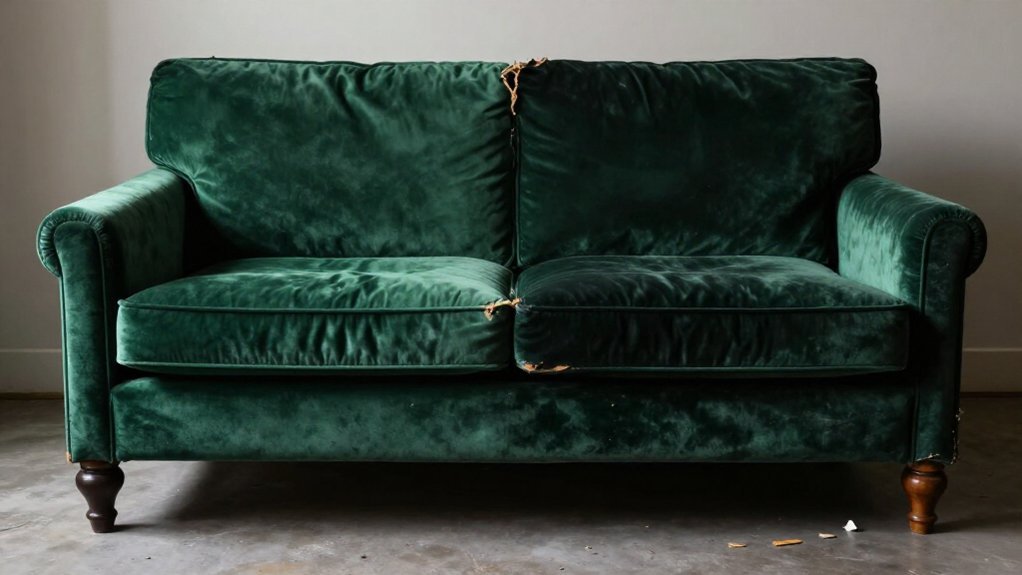
When a sofa starts showing its age, the repair-or-replace decision hinges on what’s actually failing underneath the upholstery.
You’ll want to repair when the frame feels solid and only the seat foam has collapsed; cushions that stay compressed instead of bouncing back are clear signs you need repair, not replacement. If your sofa is structurally sound but the fabric is failing, reupholstering offers a middle ground, though you should compare costs to buying new since durability depends on underlying components.
Replace when you notice structural issues like creaking, wobbling, or deep sagging that lets you feel the frame through padding. Split seams, heavy fraying, or permanent stains that won’t clean also justify replacement. Most sofas reach 7–15 years of sofa lifespan, so if you see multiple can’t hold shape symptoms after daily use in that range, replace rather than repeatedly fixing what’s failing.

SAFE, ODORLESS AND NON TOXIC FABRIC PROTECTOR : protectME is a non-flammable, odorless upholstery fabric protector spray that will not alter the natural look, feel, or scent of the material. It features a water-based amorphous silicon dioxide formula, contains no forever chemicals, won’t release fumes and is safe to use around your family and pets.

Nano-Coated Fiber Technology – Our chair fabric upholstery features polyester fibers embedded with nano-level protection that repels spills and grime at the core — not just the surface. With AquaClean water-cleanable performance, most stains can be lifted with just a damp cloth or steam — no harsh solvents or spray cleaners needed.

Nano-Coated Fiber Technology – Our velvet upholstery fabric features polyester fibers embedded with nano-level protection that repels spills and grime at the core — not just the surface. With AquaClean water-cleanable performance, most stains can be lifted with just a damp cloth or steam — no harsh solvents or spray cleaners needed.
Which Daily Habits Wear Sofas Out Faster?
You might not notice how your sitting patterns, like hard plopping or skipping cushion rotation, compress foam unevenly and strain upholstery over time.
Environmental exposure risks, such as placing your sofa near sunny windows or heating vents, can fade fabrics and weaken materials even when the frame remains solid. Pet claws, guest traffic, and inconsistent vacuuming also accelerate wear, so you’ll want to weigh these factors against your sofa’s build quality and expected lifespan.

BED FRAME REPLACEMENT LEGS: Bed Frame Replacement Legs are made of high-quality non-plastic materials and have a long service life. Replacement legs for bed frame are strictly tested before leaving the factory and are suitable for your bed legs support replacement parts. Bed frame replacement legs are sturdy in structure and available in a variety of specifications to suit different bed frame heights. Bed frame parts replacement plays a good role in stabilizing the support of bed frame legs.

Top 7/8" insert into your bed frame. 2 13/16" contributing to the height of bed frame. Top inner diameter 23/32", outer diameter 15/16". Note: Please make sure the Outer Diameter of your bed leg is not over 23/32"

Heavy Duty Reinforced Bed Frame Legs Replacement
Sitting Patterns Matter
Most sofa owners will get 7 to 15 years from a quality frame, but your nightly routine can cut that timeline in half if you’re crushing the same cushion geometry every evening. Sitting patterns matter more than you expect when calculating how long a couch will actually last.
You might plop down with zero grace, or prop your feet on the arms, and each habit concentrates stress on specific fabric and foam zones. A sofa should typically last over a decade, yet you will see it showing signs of wear within two to three years if you never rotate positions.
Even flipping cushions fails when corner shapes force repeated compression into identical contact points. Low-density foam under 1.5 lb/ft³ degrades fastest, so your maintenance habits determine whether you get the full lifespan or accelerated sagging.
Environmental Exposure Risks
Sitting patterns aren’t the only force working against your sofa’s longevity, because the room itself can quietly accelerate wear in ways you might overlook. Direct sunlight streaming through windows fades durable upholstery and weakens fibers, so you’ll want to reposition your sofa or install window treatments. Heat and dryness from radiators and vents dry out cushion materials and adhesives, increasing sagging risks.
Humidity and temperature swings stress soft woods and particleboard frames, causing warping that compromises structural integrity. You should vacuum weekly to remove abrasive grit, and schedule a deep clean periodically to prevent fabric degradation. These environmental factors, combined with pets (whose claws and oils demand stain-resistant fabrics), determine whether your investment lasts eight years or fifteen.
Pet and Guest Impact
Beyond your own daily use, pets and frequent guests introduce concentrated wear patterns that can shorten a sofa’s lifespan by 20–40%. Homes with pets face pets scratches, repeated claw contact, and moisture exposure that push typical 10–15 year lifespans down toward 5–10 years.
Dogs especially accelerate wear on budget microfiber, where sofas often last only 3–5 years, though performance fabrics and leather resist damage better. High guest traffic compresses cushions faster, so primary seating can show wear within 5–7 years even with care.
You should rotate cushions every 2–3 months and vacuum regularly to limit fiber grinding. Upholstery can last longer with deep cleaning, but pet-heavy households skew toward shorter ranges. When asking “How Long Should a Couch,” compare your real wear against 7–15 year averages versus 3–5 years for low-cost builds.
Which Frame and Cushion Specs Matter Most?
When you’re shopping for a sofa that’ll actually hold up, you’ll want to zero in on two things right away: the frame and the cushions. Frame first: insist on kiln-dried hardwood, like maple or oak, because engineered wood warps and cracks sooner. This choice directly affects how long your investment lasts.
For cushions, high-density foam, specifically 1.8–2.0 lb/ft³ or higher, delivers 7–10+ years versus 1–3 years for lightweight alternatives. Pair that with high-resiliency foam or spring-core support, and you’ll avoid bottoming out. Top-grain leather won’t save a sagging seat if the frame and foam fail beneath it.
Check casters and upholstery too, but prioritize construction over design in wear zones. These specs determine whether your sofa reaches 7–15 years or quits at 3–5.

BIG UPGRADE – LAVEVE couch support features an ergonomically designed thickness. Its upgraded multilayer solid wood composite structure is designed to effectively solve sagging couch cushions while maintaining the right balance of firm support and comfortable flexibility. Each board supports up to 400 lbs for reliable, long-lasting support.

ADD STRONG, LONG LASTING SUPPORT TO COUCHES AND SOFAS: easily and quickly upgrade your sagging couch or sofa with our ultra-strong, high-quality plywood sofa cushion support board; adds extra support and comfort to couches with sagging frames, cushions, or worn-out springs; our sofa support boards are 21.5” wide to cover more surface area, providing more couch cushion support for sagging couch seats

LONG-LASTING SUPPORT - Our sofa support for sagging cushions targets couch cushion sagging issues, effectively eliminating sag and collapse on sofas/armchairs from prolonged use. This sagging couch support under cushion adds extra cushioning support for drooping seats, restoring stable support and comfort for all-day cozy sitting.
What Maintenance Habits Actually Extend Sofa Life?
You can extend your sofa’s lifespan notably through three consistent habits: you’ll want to rotate cushions every few months for even wear distribution, vacuum weekly with an upholstery attachment to prevent abrasive dirt buildup, and position the piece away from direct sunlight and heat vents since UV exposure degrades fabric fibers and foam cores faster than normal use.
These practices won’t reverse existing damage like permanent cushion compression or torn upholstery, but they’ll slow deterioration and delay costly reupholstery or replacement. If you combine this routine with immediate spill blotting and professional cleaning every one to two years, you’re giving your frame and cushions the best chance to reach or exceed a ten-to-fifteen-year service life.
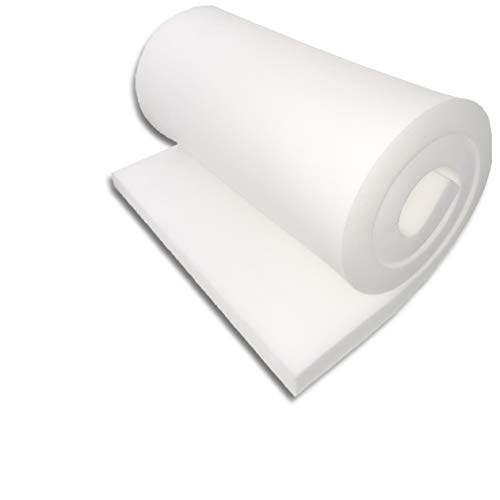

Package Include: you will receive 6 white high density foam cushions replacements, measuring about 2 x 22 x 22 inches, which are suitable for most seats; The product has a density of 2.2; It is a 50 ILD high-density foam; There are sufficient quantity for your daily use and replacement needs

【Dual-Layer Ergonomic Design】Our upholstery foam features a premium 2-layer composite structure that delivers the best of both worlds. The top memory foam layer provides slow-rebound pressure relief, the high-density support foam base prevents sagging and bottoming out, maintaining structural integrity for comfort. Available in 6 thickness options (1"/2"/3"/4"/5"/6") with optimized memory foam-to-support foam ratios for each thickness
Rotate Cushions Regularly
Rotate your sofa’s cushions every few months, or even daily if you’ve spotted heavy “hot spots” where you always sit, to spread out the wear and keep any single area from compressing too fast. Rotate and flip seat cushions regularly, especially in zones of heavy use, because uneven compression kills cushion life early. Corner-cut cushions limit your flipping options, so wear them corner-to-corner instead.
You feel the sagging start, and you know you’ve waited too long. Your favorite spot betrays you, becoming the first to flatten. You paid for quality foam, but neglect steals years from it. You discover “normal wear and tear” is code for preventable damage.
With 1.8 lb/ft³ foam, expect 5–7 years; 2.0+ lb/ft³ delivers 7–10+ years with care.
Vacuum Weekly Consistently
Beneath the surface of your upholstery, microscopic grit accumulates with every sit, and you’re grinding that debris deeper into fibers each time you shift your weight. You need to vacuum weekly to remove grit that acts like sandpaper, accelerating pilling and thinning across cushions and arms. Use a soft brush attachment, and work into seams and creases where debris concentrates and wears fabric faster than flat center areas.
Pair this habit with treating spills immediately, since set-in residue destroys stain resistance and can’t be fully reversed later. If you share your sofa with pets, weekly vacuuming becomes critical, as dander, hair, and claw debris from pet scratches can cut lifespan by 20 to 40 percent without aggressive maintenance. This discipline preserves cushion loft in high-density foam and helps you reach the upper end of that 7 to 15 year range, protecting one that’s built to last.
Minimize Sun Exposure
Where does your sofa face each morning? If your living room soaks up sunrise, you’re already cutting years off your couch’s lifespan. UV rays degrade upholstery fibers silently, and new years typically feel shorter when you’re replacing faded furniture prematurely.
You can take control with simple steps:
- Draw your curtains by 10 a.m., because light-colored weaves yellow faster than you’d expect.
- Move your sofa away from heating vents; heat plus sun accelerates cracking in leather and fabric alike.
- Rotate cushions monthly, but only after you’ve reduced exposure, since repositioning won’t prevent concentrated fading.
- Vacuum weekly alongside sun control, because grit abrades fibers already weakened by UV damage.
Conditioning to prevent dryness helps leather, but no product blocks radiation. Long a couch lasts depends on where you place it first.
How Do You Buy a Sofa Built to Last?
When you’re shopping for a sofa that’ll hold up for years, you’ll want to tear past the surface styling and dig into what’s hidden underneath.
Start with the frame: insist on kiln-dried hardwood, like maple or oak, since particleboard warps and softwood cracks under stress. Check cushion durability by verifying foam density; 1.8 lb/ft³ gives five to seven years, while 2.0+ lb/ft³ stretches past a decade. Test the seat: quality cushions bounce back immediately, not stay compressed.
For upholstery, performance fabrics resist stains and wear, and if you prefer leather sofas, know that top-grain lasts ten to twenty years versus bonded leather’s three to seven. Choose neutral tones for flexibility, and with proper care, you’ll replace cushions, not the whole sofa.

[Premium Fabric Material]: Upholstered in woven polyester fabric with high-density foam seat cushions, delivering comfort and durability suitable for daily use in relaxation spaces

EXQUISITE CRAFTSMANSHIP: Meticulously crafted with a kiln-dried hardwood frame and solid stainless steel legs showcasing durability; The 3 piece living room set includes the sofa, loveseat, and chair

Make Good Living Gettable: The Napa left facing sectional sofa by Poly and Bark is a premium leather couch featuring full-grain pure-aniline or semi-aniline dyed Italian leather upholstery. Our high-quality leather sofa is built to be the perfect living room centrepiece.