You will spend roughly three years of your life staring at your bedroom curtains, so you might as well measure them correctly. The wrong length ruins your upholstery, traps dust on casters, and makes your windows look cheap.
You have two real options: float-length, which hovers a precise 1/2 inch above the floor for that crisp, modern line, or break-length, which adds 1 to 2 inches so the fabric kisses the surface with forgiving grace.
Your floor’s levelness, your tolerance for daily adjustment, and whether you own a vacuum you actually use will determine which camp you join.
The method matters too: rod-to-floor, subtract or add, no guessing.
But here is the problem most guides won’t confront.
Best Bedroom Curtain Length: Break or Float?
When you’re deciding how long your bedroom curtains should be, you’ll typically choose between two popular lengths: break or float. Break-length bedroom curtains rank as the best curtain length for creating a polished, frame-like effect, since you measure from the rod to the floor, add one to two inches, and watch the fabric kiss the ground. You’ll find these curtains touch the floor just enough to graze it, lengthening your space without pooling excessively.
If you prefer float-length curtains, you’ll subtract roughly half an inch from your rod-to-floor measurement, achieving a clean look that hovers slightly above the surface. You’ll hang curtains either way based on your priorities, so for ideal light control and that nearly touch the floor look, break-length serves most bedrooms beautifully.
Float-Length Bedroom Curtains: Clean Look, Tricky Fit
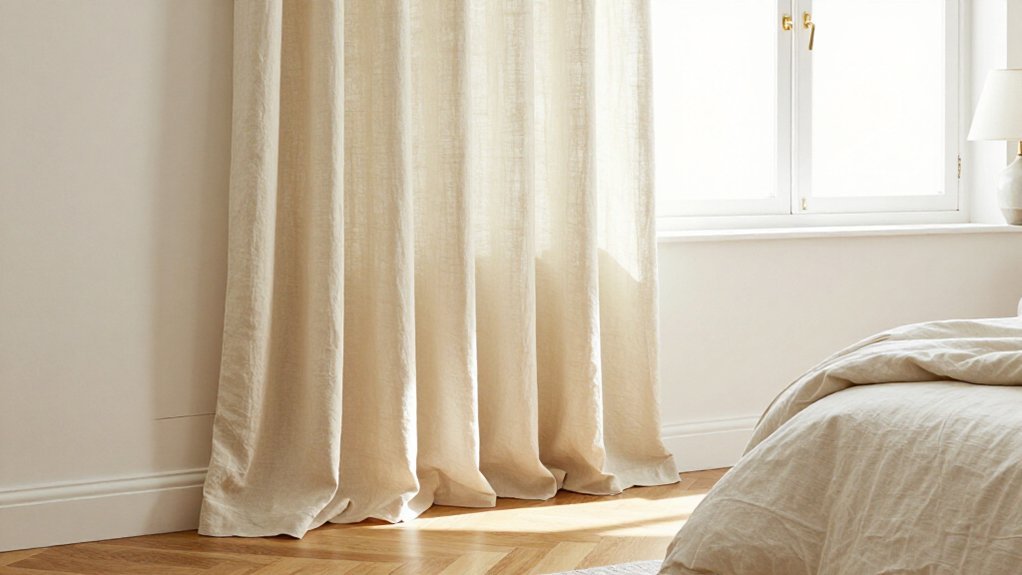
For a crisp, contemporary aesthetic, you’ll want float-length bedroom curtains that hover roughly one-half to one inch above your flooring, though the sweet spot sits closer to that half-inch mark for a truly tailored appearance. Curtain length looks best when you measure from the rod, then subtract that half-inch for your final hang point.
Float-length curtains demand level floors; uneven surfaces make your deliberate gap look like a mistake, not upholstery precision. Natural fabrics like linen or wool may sag toward the floor over time, so you’ll cut slightly shorter or watch the fabric creates its own drift.
Level floors first; uneven ones betray the precision you measured for.
- See morning light slipping through a precise half-inch channel, casting a thin shadow line across your hardwood.
- See the hem floating like a paper’s edge, never touching dust or caster wheels below.
- See your curtain rod as a ruler, each inch marked for subtraction toward that clean break.
- See the tailored look holding steady, even as seasons shift and fibers relax.
Break-Length Curtains: The Safest Choice for Most Bedrooms
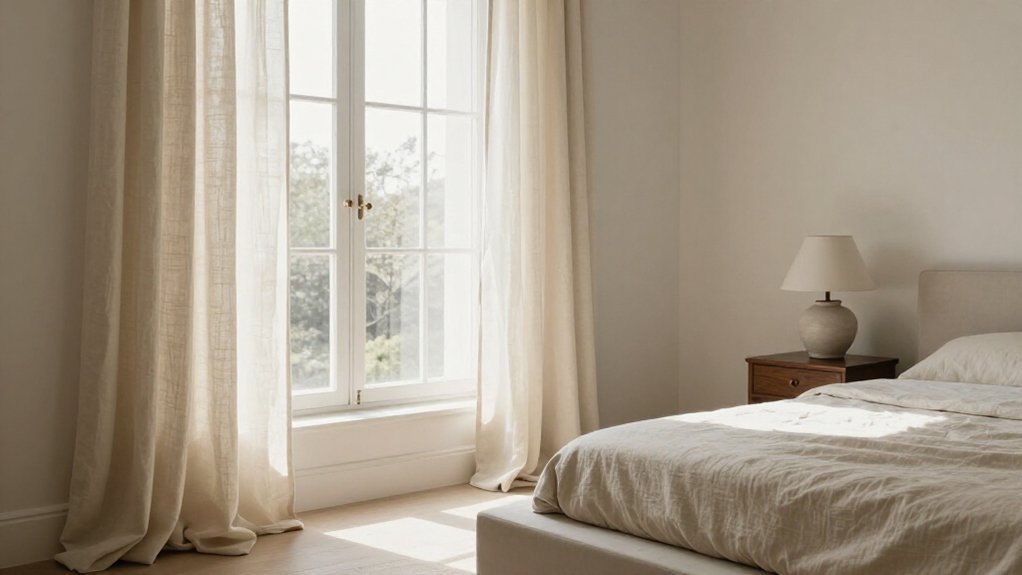
Though float-length curtains demand exacting precision, you’ll find break-length curtains offer a more forgiving path, and they remain the go-to choice for most bedrooms because they gently kiss the floor with roughly one to two inches of excess fabric past your rod-to-floor measurement.
You measure from your curtain rod to the floor, then add 1 to 2 inches of excess fabric for this tailored curtain length. This modest break reads polished without fuss. Break-length curtains move freely when you open and close them daily, and they graze the floor without forming a dust-collecting puddle that traps debris. The slight overhang also helps disguise uneven casters or warped floorboards beneath upholstery and rugs.
For light blocking and practical maintenance, this curtain length balances elevated style with bedroom functionality.
Skip the Puddle: Why Pooling Curtains Don’t Work in Bedrooms
Why do pooling curtains tempt so many bedroom decorators? You see pooling “puddle” drapes in magazines, and they look rich and expensive, but in bedrooms, they create daily frustration.
When you’re opening and closing panels each morning and night, that extra fabric drags, can catch on feet, and will collect dust from floor traffic. The hem snag risk rises near bed casters, nightstands, and upholstery edges. You’re also keeping curtains neat becomes tedious, as pooled fabric settles unevenly on imperfect floors, revealing rather than hiding flaws.
Skipping the puddle makes sense for active spaces. Instead, choose a float finish, hovering 1/2 to 1 inch above the floor, or a kiss finish, barely touching at 1 to 2 inches. These options move freely, stay cleaner, and suit real bedroom life. Reserve pooling for decorative, stationary windows only, far from pets, kids, and foot traffic.
How to Measure Bedroom Curtain Length: Rod-to-Floor Method
The simplest way to get bedroom curtains that actually fit is to hang your rod first, then measure from the underside of that rod (or from where your rings or clips sit) straight down to the floor.
Once you have this length, choose your target finish: float keeps fabric about 1/2 inch off the floor, break adds 1–2 inches so the hem lightly kisses the surface, and puddle adds 3–6 inches for pooled fabric. For daily use, float or break works best, since deep puddles snag on casters and collect dust.
Check both sides of your window with a level and tape, as uneven floors make break or puddle styles more forgiving. Round your curtain length to standard drops like 84, 96, or 108 inches, remembering you can always shorten window treatments but never lengthen them.