You’re standing in a room that needs warmth underfoot, and you’re wondering what an area rug will actually cost you.
The answer spans from $50 synthetic accent pieces you can roll up yourself to hand-knotted wool specimens exceeding $15,000, with most buyers landing somewhere between $200 and $2,500 for quality construction.
Size matters: a 3×5 machine-made polypropylene runner costs far less than an 8×10 hand-tufted wool foundation, and hidden expenses like rug pads, shipping at 10-15% of purchase price, and professional cleaning will push your total higher than the tag suggests.
Material selection and knot density drive durability, while resale value, noise reduction, and furniture caster protection separate practical investments from disposable floor coverings.
Your specific needs around foot traffic, pet exposure, and maintenance tolerance will determine whether you should prioritize stain-resistant synthetic fibers, natural wool with lanolin oils, or heirloom-grade silk blends.
The real question isn’t what rugs cost, but which cost categories align with your space, lifestyle, and how long you intend to keep the piece before the next move.
Area Rug Prices by Size: From $50 Accents to $15,000 Showpieces
At the entry level, you’ll find small 3×5 synthetic rugs priced around $50 to $100, which work well as accents in tight spaces like entryways or beneath casters.
As you move up in area rug prices by size, expect to pay $600–$800 for a standard 6×9 wool piece that anchors most living rooms. Large 8×10 area rugs span dramatically, with hand-knotted traditional versions typically running $1,000 to $5,000 or more, depending on craftsmanship and materials.
Bigger showpieces escalate quickly: designer silk rugs, exceptional vintage finds, and outstanding handmade specimens can command $15,000 or more for larger dimensions. Size drives cost because bigger rugs demand substantially more fiber and labor. Remember, surface area alone doesn’t determine value; fiber selection, construction method, and overall quality create significant price variation even within identical dimensions.

Design features a modern, geometric pattern that adds a bold, contemporary touch to any space.

Wilton Woven Polypropylene Rugs: This outdoor rug is built for everyday heavy-duty use. Standard flat-woven and printed rugs hold yarns with backing adhesive, while tufted styles rely on glue that easily causes fiber shedding and backing delamination. Our Wilton rugs are fully woven on double looms, interlocking warp, weft and pile yarns as one piece. Piles are secured to the base without adhesive, drastically reducing loose fibers and layer separation. Featuring tight dense stitching, these rugs remain firm and keep their original shape under heavy foot traffic and pet clawing

Maintain Your Rug with Ease: Vacuum regularly and spot clean as needed. For best results, avoid using a vacuum with beater bars to protect the rug’s fibers. Not Machine Washable.
Hidden Costs That Inflate Your Area Rug Budget
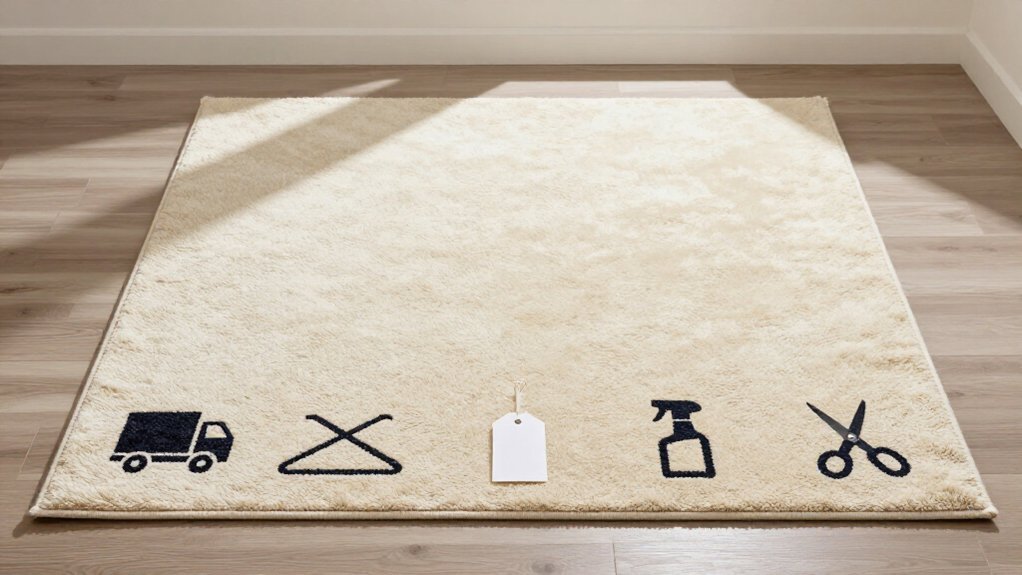
While the sticker price might seem manageable, you’ll quickly discover that several overlooked expenses can push your actual spending well beyond the advertised figure. Rug prices rarely tell the whole story, and hidden costs accumulate quickly.
You’ll need a quality rug pad, especially for thin cotton rag rugs, to prevent dangerous sliding in high-traffic zones. Shipping fees and sales tax frequently inflate your final total, turning that bargain find into a budget breaker.
Higher-pile wool demands professional deep-cleaning, and you’ll vacuum more intensively too. Washable rugs promise convenience, yet shrinkage and warping under casters or cat claws can force early replacement. Custom color or design changes start at a higher baseline than standard production models, raising your investment beyond initial expectations.
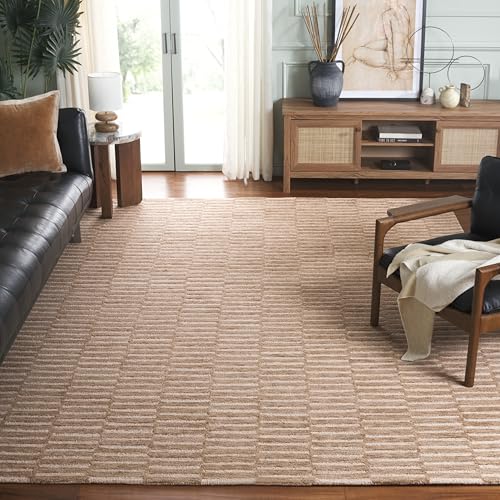
[DURABLE QUALITY HANDMADE CONSTRUCTION]: Hand-knotted by skilled artisans for a truly unique textured look and feel

[DURABLE QUALITY HANDMADE CONSTRUCTION]: Hand-tufted by skilled artisans for a truly unique textured look and feel

Contemporary design is a stylish addition to any room of the home
What Drives Area Rug Prices: Materials, Construction, and Design
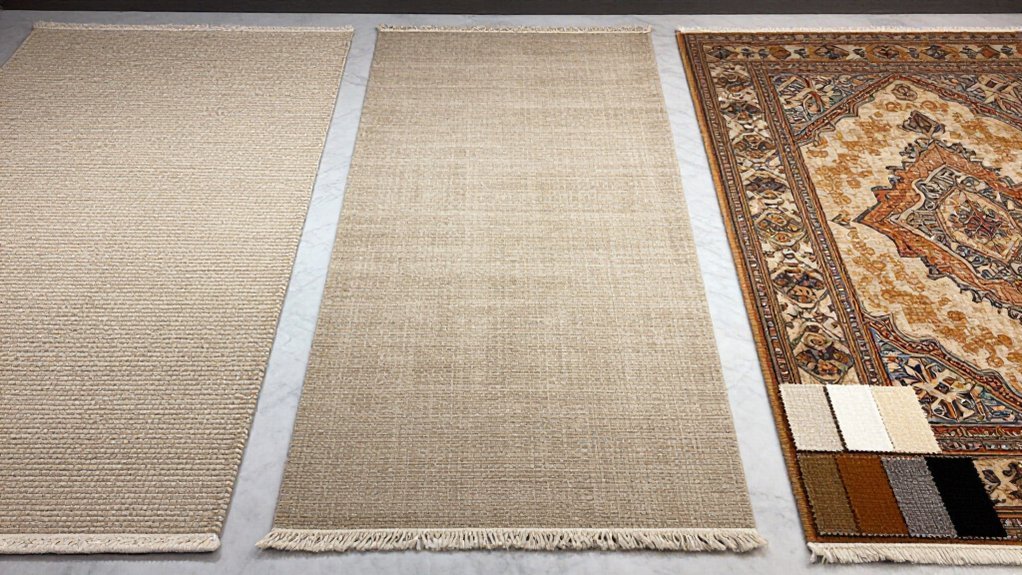
When you’re shopping for an area rug, you’ll quickly notice that natural fibers like wool, silk, and cotton command higher prices than synthetic options such as polypropylene or polyester, with a quality 6×9 wool rug typically running $600, $800. Construction methods matter just as much, since handmade techniques like hand-knotting and hand-tufting require more labor and skill than machine-made alternatives, which directly impacts what you’ll pay.
Understanding these two factors, materials and construction, helps you balance your budget against the durability and craftsmanship you actually need for your space.

Timeless Elegance with Vintage Charm: Enhance the beauty of your living spaces with a touch of vintage charm. Our washable area rug features a unique speckled vintage design in warm tones. With its play on light and shadow, this carpet showcases captivating visual effects that make a statement in any home space. Whether placed in the living room, bedroom, or office, this carpet serves as a focal point, adding a touch of elegance and fashion-forwardness to any interior.
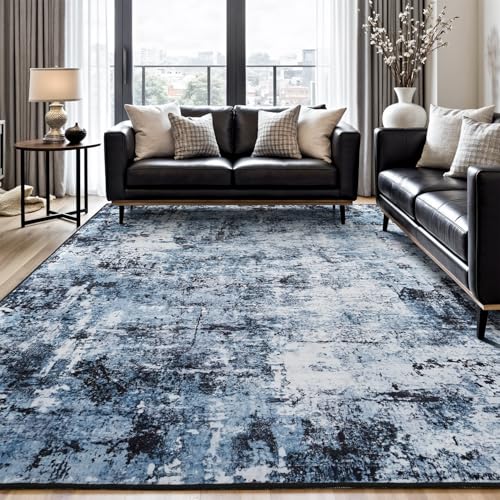
Modern Abstract Rug: Evokes the essence of ocean and sea foam, blending neutral tones of navy blue and black with abstract artistry. Offers a lived-in charm while effectively hiding messes, great for living room, bedroom, dining room, nursery room, playroom, classroom or dorm

STYLISH DESIGN: This trendsetting striped area rug design in a rich warm color palette combination can be perfectly paired with a variety of home décor styles.
Materials and Fiber Types
Because fiber choice shapes both upfront cost and long-term performance, you’ll want to weigh materials carefully before buying. Wool delivers exceptional durability and natural resilience, though you’ll pay more initially than for a synthetic rug. Cotton offers middle-ground affordability with moderate wear resistance. Silk commands premium prices for unmatched luster and softness.
Consider how these materials affect your daily experience:
- You’ll feel wool’s warmth underfoot during cold mornings, knowing it resists crushing from furniture and casters.
- You’ll notice synthetic fibers resist stains and fading, making them practical for high-traffic zones and homes with pets.
- You’ll appreciate cotton’s breathability in humid climates, though it shows wear faster in entryways.
- You’ll invest in silk for heirloom-quality pieces, accepting that sunlight exposure requires careful upholstery protection and placement.
Construction Methods Compared
Construction method shapes your rug’s price tag as much as its fibers do, and you’ll want to understand what you’re paying for before committing. Handmade rugs command premium prices because artisans knot each piece individually, so you’ll see traditional hand-knotted 8×10 rugs in a price range of $1,000 to $5,000 or more.
Machine-made alternatives cost far less, though they sacrifice longevity and unique character. You’ll notice that pile height and density also affect what you pay, with deeper, denser constructions requiring stronger vacuuming and higher upfront investment.
When you evaluate options, balance your budget against how long you need the rug to last. Handmade pieces suit high-traffic areas and collectors, while machine-made rugs work for tighter budgets or temporary spaces. Choose construction based on your priorities.
How Much to Budget for a Quality Area Rug
Although quality varies widely, you’ll typically need to budget $200 to $5,000 for a good area rug. Your final cost depends on three main factors: size, material, and construction.
You’ll pay more for wool rugs than synthetics, and handmade construction commands premium pricing over machine-made alternatives. When you size up from a 3×5 area rug to an 8×10 or 9×12, expect substantial increases due to material and labor scaling.
Your budget must also account for essentials beyond the rug itself:
- Rug pads prevent sliding and extend floor life
- Shipping fees add 10-15% to online purchases
- Sales tax applies to most transactions
- Protective treatments guard against stains
Small synthetic rugs (3×5) typically run $50-$100, while traditional hand-knotted 8×10 pieces commonly exceed $1,000.

NOT NON-SLIP - This pad is meant for use with rugs anchored by furniture or heavy rugs that stay in place on their own. For non-slip applications, try one of our felt and rubber options.

NON-SLIP GRIP FOR SAFETY: Durable latex rubber backing prevents slipping, sliding, bunching, and wrinkles on hardwood, tile, carpet, or any floor—superior hold compared to basic foam pads for everyday use.

Helps Prevent Rug Slippage: Designed with a unique high-density cross-bar texture and silicone backing, this carpet underlay provides a powerful anti-slip grip. Keeps area rugs securely in place, preventing sliding, bunching, and wrinkling.
Ready-Made vs. Custom Area Rugs: Cost Comparison
When you’re weighing ready-made against custom area rugs, your wallet will feel the difference immediately. Ready-made area rugs cost less because they’re produced in ongoing runs, while custom area rugs demand higher prices when you alter colors, designs, or materials. Expect custom projects to sit toward the upper end of typical room-size ranges, which span roughly $5,000 to $50,000 or more depending on construction and fiber content.
Wool and handmade techniques increase costs in both categories, but customization adds its own premium atop base materials and dimensions. Remember to factor shipping, taxes, and rug pads into your total delivered cost, not just the listed price. Your comparison must account for these extras to reflect true expenditure.

Great Value & Chic Style: This 2 X 3 hallway runner rug adds a vibrant touch to your living room with its beautiful colors and subtle pattern that complements your furniture and decor. It's soft to the touch and looks as elegant as more expensive entryway rugs, offering excellent value for its quality.

DURABLE AND PLUSH: Crafted from 100% Polypropylene, Long-lasting and sturdy jute backing (rug pad recommended), 0.39 inch rug thickness, meant for indoor use, perfect for high traffic areas, ideal for homes with childrens, fits under most doors

Machine Washable Rug: The 8x10 area rugs are machine washable and easy to clean. You can use a broom, vacuum cleaner, or robot vacuum for daily cleaning. If water or drinks spill on the rug, wipe it promptly with a dry towel. If you need a deep clean, this modern rug can be machine washed gently in cold water
Where to Find Quality Area Rugs for Less
For shoppers hunting value without sacrificing durability, the smartest move is sticking with ongoing production lines rather than commissioning custom work, since altering colors, patterns, or fiber content is what inflates prices fastest. You can stretch your budget by targeting machine-made synthetics over handmade wool. Sizing flexibly helps too: a 4×6 area rug often costs notably less than a 6×9.
Consider these practical strategies:
- Visit a Rug Gallery for ongoing production lines with transparent material specs, like 85% cotton/12% polyester flatweaves.
- Choose washable flatweaves for kitchens and bathrooms; they’re easier to maintain without wool premiums.
- Select medallion designs over allover patterns; you’ll avoid trend-complexity markups.
- Anchor your budget to construction: machine-made synthetics deliver visual upgrade at lower cost.

Pile: Polypropylene - Backing: Cotton - Weave: Machine Made (Power-Loomed) - Made in: Turkey

Geometric outdoor rug adds an instant pop of pattern

[COLOR & PATTERN]: SAFAVIEH's Lyndhurst rug features a rich sage field that showcases intricate floral motifs and multicolor accents, while a contrasting ivory floral border adds timeless character; color may vary with room lighting
5 Mistakes That Raise Your Area Rug Costs
You’ll blow your budget fast if you skip measuring before you shop, since jumping from a 3×5 synthetic to a 6×9 wool can spike your cost from roughly $50–$100 to $600–$800.
You’ll also overpay if you default to hand-knotted wool or silk when a midrange synthetic or machine-tufted wool would handle your traffic, upholstery, and caster wear just fine.
Measure your space, match materials to actual use, and you’ll avoid the two costliest mistakes buyers make.

Transitionally designed, these rugs can be integrated into any contemporary, modern, Traditional, or bohemian styles of Décor.Construction type:Hand Loomed

[DURABLE HANDMADE CONSTRUCTION]: Hand-hooked by skilled artisans for a truly unique textured look and feel
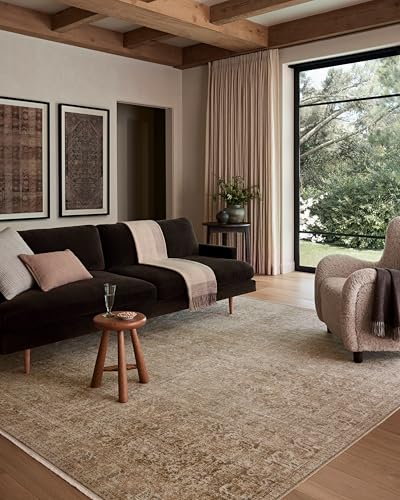
Area Rug for Living Room and More: The Molly Collection is made with a unique fabrication that creates an almost identical replica of a vintage rug with a low, textured pile and varied tones; beautifully designed by Amber Lewis x Loloi.
Poor Size Planning
Why does a single sizing error cost you hundreds before you even unroll the rug? You underestimate rug size, and larger rugs suddenly become your only option because you didn’t measure your room or plan how much furniture, like sofas with casters or upholstery pieces, must sit on top.
Poor size planning drains your wallet through these painful missteps:
- You buy too small, then you replace it with larger rugs that cost substantially more in material and labor.
- You skip measuring, so you later force yourself into a pricier size that unifies the room properly.
- You ignore standard sizes, such as 8×10 or 9×12, so availability shrinks and prices climb.
- You buy wrong, so you add rug pads for high-traffic sliding prevention, or you pay custom premiums for new designs, colors, and materials.
Ignoring Material Costs
Because material choices drive the bulk of your total spend, ignoring construction and fiber type from the start leaves you vulnerable to sticker shock or, worse, a rug that fails under your sofa’s casters and heavy upholstery. You might assume a Wool Rug will always cost less than silk, but hand-knotted wool (8×10) typically runs $1,000–$5,000+, while machine-made synthetics actually cost less upfront.
You should weigh durability against maintenance: that plush 100% wool, medium-to-high pile demands stronger vacuuming and professional deep-cleaning, raising lifetime costs. If you skip comparing construction methods, you could pay premium prices for handmade quality you don’t need, or buy cheap synthetics that crumble under traffic. Match material to your room’s demands, and you’ll avoid both budget blowouts and premature replacement.