Your mental furniture could use new upholstery, and Dale Carnegie’s framework offers casters for easier rearrangement. You accept the worst, improve on it, and work busily.
The method limits worry through structured rest, fact-gathering, and gratitude. It demands daily discipline, and results vary by temperament.
Some find the tone dated, the anecdotes repetitive. Still, the core loop; decide, act, rest; retains utility.
You’ll want to know whether the three-step system actually survives modern scrutiny, or if its vintage binding has frayed beyond repair.
The 3-Step Worst-Case Method to Stop Worrying
When you feel worry tightening its grip, you can use Dale Carnegie’s three-step method to break the cycle and regain control. First, you ask yourself what the worst that could happen actually is, pinning your fear to a concrete, measurable outcome rather than letting it float undefined. Second, you make yourself willing to accept that worst case if it comes; this acceptance removes the unknown’s power over you.
Third, you calmly work to improve upon that accepted situation, channeling anxiety into deliberate action. Carnegie developed this approach for *How to Stop Worrying and Start Living* because statistics show most worries never materialize; worst-case thinking lets you focus energy where it matters. Once you’ve completed all three steps, you dismiss further anxiety and carry out your decision.


How to Break the Worry Habit by Keeping Busy

You can crowd out worry’s “wibber gibbers” by filling your schedule with constructive work, turning anxious energy into productive motion through deliberate daily occupation. When you organize tasks by importance, maintain a clear workspace, and delegate systematically, your mind stays anchored in present action rather than drifting into rumination.
This approach won’t eliminate uncertainty entirely, but it shifts the odds, keeping you too occupied with current responsibilities to feed tomorrow’s fears.

IMPROVES MENTAL HEALTH: Use this journal to improve mindfulness, uncover triggers, track physical and emotional sensations, document your worries, evaluate evidence for and against your automatic thoughts and ultimately walk away, in control, with more constructive ways of thinking.

Guided Daily and Weekly Self-Care Reflection - This guided self-care journal includes structured daily and weekly prompts designed to support reflection, mindfulness, and intentional time for yourself.

Action Crowds Out Worry
Crowd worry out of your mind by filling your hands with purposeful work, since empty hours let anxiety breed like dust under neglected furniture casters. In *How to Stop Worrying and Start Living*, you’ll learn to live in day-tight compartments, directing energy only toward today’s tasks.
Keep your desk clear of everything except the immediate problem at hand; this physical order creates mental focus. When you possess sufficient facts, decide then and there, because delay feeds uncertainty, and uncertainty expands worry like moisture swells warped upholstery.
Switch from thinking to working the moment anxiety surfaces. Identify the worst outcome, accept it if necessary, and calmly address that situation. Action occupies the mental space where worry otherwise colonizes, so you’ll start living instead of spiraling.
Constructive Work Therapy
The “wibber gibbers” of ruminative thought lose their grip when your hands grip purposeful tools, since Carnegie treats constructive work as a direct therapeutic intervention against habitual worry. You’ll Start by handling problems then and there, when facts for a decision are available, so worry doesn’t metastasize during delay.
Clear your desk of everything except materials for your immediate task, then attack items in order of importance. This creates day-tight compartments, focusing only on today’s completable work, preventing anxiety from bleeding into past regrets or future fears. You gather facts, make step-by-step decisions, take immediate action, then dismiss the outcome.
The mechanics are simple: concentrated labor leaves no bandwidth for negative thoughts. Constructive work therapy isn’t infallible, though; it requires sufficient tasks and mental clarity to execute, limitations you should weigh against your circumstances.
Staying Occupied Daily
Against the pull of idle rumination, you’ll crowd worry out by keeping your hands and mind occupied with purposeful tasks, since Carnegie frames busyness not as mere distraction but as active therapy for the “wibber gibbers.” You start each morning by sorting your tasks into strict order of importance, then you attack what’s in front of you before the mental hourglass malfunctions under too many simultaneous demands.
You maintain a clear desk, removing every paper except those tied to your immediate problem, so your attention won’t drift into future-leaning worry. When you already hold the necessary facts, you solve decisions on the spot.
You count your blessings through deliberate action, not idle thought. You use the law of present focus, filling your day-tight compartments with constructive work. Worry shrinks when busyness expands; you’ll reclaim peace through motion, not anticipation.
The Day-Tight Compartment: Stop Worrying About Tomorrow

Because worriers often find their minds slipping into tomorrow’s obligations, Carnegie proposes that you seal yourself inside a “day-tight compartment,” where only today’s tasks may enter. Worrying expands when you drag yesterday’s regrets or tomorrow’s burdens into your present hour, so day-tight compartments isolate you to this single day.
Picture your mind as an hourglass: sand drops grain by grain, and forcing multiple grains through at once jams the mechanism. Your morning brings hundreds of tasks, but you must complete them in sequence rather than letting your to-do list balloon into anxious future-thinking.
Stop leaning into tomorrow. Focus on step-by-step action that preserves your peace and judgment for today. By compartmentalizing time into today-sized decisions, you anchor yourself to present work and prevent worry from spreading.

Boost Your Happiness in Just Minutes - Our gratitude journal for women is designed to elevate your mood and mindfulness with unique daily prompts and uplifting quotes. Perfect for busy individuals committed to personal growth, it only takes a few minutes to enrich your day

Hardcover Gratitude Journal - The Gratitude journal for women men is 5.9" x 8.6" can easily be carried anywhere, The cardboard cover is waterproof and oil-resistant. The metal rounded corners are designed to prevent damage and scratches.The page we use 100 gsm thick paper, which is smooth, does not easily curl the edges, and does not bleed ink with gel pens or markers. 360° double-wire spiral, lay flat and turn pages easily

How Worry Damages Your Health: and How to Reverse It
You aren’t built to carry chronic worry without paying a physical price, since your body interprets sustained anxiety as an active threat and channels resources toward survival rather than repair. Your stomach, your teeth, and your blood pressure all register what your mind refuses to release, so you exhaust your reserves even when circumstances stay unchanged.
You can reverse this damage by replacing circular rumination with deliberate action: gather facts, decide, act, then rest before fatigue deepens the spiral.

✔This daily plan pad features detailed hourly schedule timelines from 12 AM to 11 PM, perfectly segment your morning, afternoon and evening hours. Track meetings, appointments and fixed tasks hour by hour to eliminate procrastination and boost your daily time management efficiency.


BOOST YOUR PRODUCTIVITY – Turn your to-do list into a clear daily schedule with a simple 3-step time blocking method: Brain Dump, Prioritize, then Time Block your day. A practical time management planner for work, school, and busy routines.
Physical Health Toll
Worry routinely exacts a measurable physical toll on your body, and Dale Carnegie’s *How to Stop Worrying and Start Living* documents this damage with the precision of a diagnostic manual. You face nervous breakdown, tooth decay, and high blood pressure when you let worry persist, and unjust criticism is often the trigger that starts this cascade.
The book treats your anxiety as a body-and-mind issue, noting how tension reaches even your stomach nerves. You weaken your immune resistance, and your white blood cells suffer, leaving you vulnerable. You must rest before you’re tired, since exhaustion amplifies every trouble.
To reverse this toll, you replace worry with calm, step-by-step problem solving and day-tight focus, keeping your body out of chronic stress. You choose peace over pointless rumination, and you build your happy life.
Mental Energy Drain
The physical symptoms you just examined are only half the damage, and your mind pays an equally steep price. You drain your mental reserves when you carry tomorrow’s troubles into today, keeping your nervous system tense instead of letting it rest.
Worry doesn’t remove your problems; it only steals your peace, leaving you unable to think clearly or act effectively. Even the most stable person can become ill from this burden. Chronic anxiety weakens your immune response, reducing white blood cells that protect you.
Methods for overcoming this drain require you to practice “day-tight compartments,” focusing only on today’s concerns. You ask what’s the worst that could happen, then cooperate with the inevitable if needed, and calmly work to improve what you can.
Restoring Peace Daily
While your body absorbs the strain of mental energy drain, your daily peace requires active restoration, and the same forces that make you ill can be reversed through deliberate habits. You can treat rest as peace insurance, guarding against the nervous breakdown, tooth decay, and high blood pressure that worry inflicts. The law of averages favors those who rest before exhaustion hits, since everything worsens when you’re run down.
Rest before you tire, because sleep stops feelings from spiraling. Relax at work and home so tension won’t accumulate. Focus on present action, not tomorrow’s problems, to break worry’s loop.
You reverse damage when you choose deliberate habits. Your mind avoids the drained, health-harming cycle through clear, immediate steps.
How to Stop Worrying About Criticism
Because criticism stings most when you take it personally, Dale Carnegie’s *How to Stop Worrying and Start Living* treats negative feedback as a material you can inspect, grade, and either use or discard, much like a furniture maker evaluating upholstery fabric or caster wheels for a chair. You learn to recognize that harsh words are often a disguised compliment, rooted in others’ envy rather than your actual flaws.
You stop letting remarks run down your neck by fixing attention on your best efforts, not on approval ratings. You record past errors as data, not as proof of failure, since perfection remains impossible. You seek unbiased, constructive input selectively, applying what improves your craft and releasing the rest.
This measured response builds happiness for others, too, as you model resilience rather than defensiveness.

►[Breathing Lamp for Mindfulness]:Science verified,4-7-8 Calming breath/5-5 Balance breath/4-4-4-4 Box breath,With Speaker,Volume +/-,Visual Meditation tool for Anxiety Relief

Helps Manage Emotional Distress and Crisis: Specifically designed to alleviate panic attacks, flashbacks, trauma recollections, anxiety, stress, dissociation, and depression, especially during times of crisis, to help restore emotional balance.

Rest Before You’re Tired: Energy Habits That Reduce Worry
- Relax at work and relax at home as a scheduled routine, not a reward.
- Keep a clear desk with only immediate-task papers to limit mental load.
- Handle decisions immediately when facts exist, then release the task.
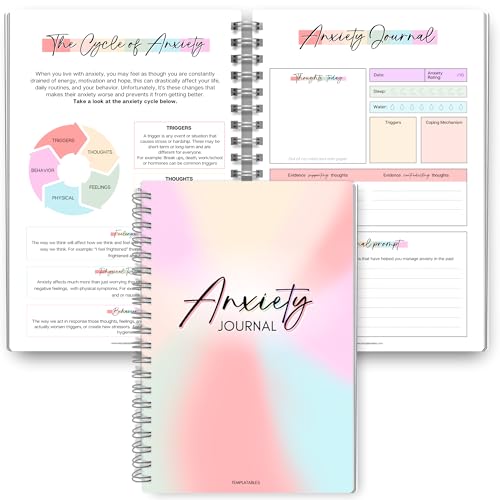
CBT-BASED ANXIETY RELIEF — Designed around proven Cognitive Behavioural Therapy techniques. Guided prompts help you identify triggers, reframe anxious thoughts and build practical coping strategies, one day at a time.

CBT-BASED ANXIETY RELIEF — Designed around proven Cognitive Behavioural Therapy techniques. Guided prompts help you identify triggers, reframe anxious thoughts and build practical coping strategies, one day at a time.

Build skills, reduce stress: Powerful CBT, meditation, and somatic exercises to become organized, focused, confident. Overcome anxiety, anger, disappointment, procrastination, impulsive behavior, emotional labor, addiction, burnout, unproductive habits
How Gratitude Replaces Worry and Builds Lasting Peace
In the quiet moments before worry takes hold, you’ll find gratitude functions like well-oiled casters on a heavy cart: it shifts your mental load smoothly, redirecting attention from feared trifles toward what already functions well in your life. You can’t hold worry and gratitude simultaneously, so you’ll practice counting blessings as a deliberate perspective change, reducing rumination on what might go wrong.
You’ll notice happiness connects more to giving than receiving, and expecting gratitude from others increases your stress, while giving without demanding repayment supports your peace. You’ll expect not everyone will be thankful, like the ten lepers where only one returned, so ingratitude won’t trigger anxious thoughts. You’ll build gratitude as a habit, training children similarly, so your mind responds to problems with steadier, calmer focus.
This practice doesn’t replace professional help for clinical anxiety, but it provides durable upholstery for daily mental resilience. You’ll find, as in How to Win Friends and Influence People, that genuine appreciation opens doors that complaint cannot.


COMPLETE SELF-CARE SYSTEM: Discover your path to well-being with 91 days of thoughtfully curated prompts and bonus video content. Our guided self care journal for women combines structured exercises, daily reflection practices, and mindfulness activities for personal growth and emotional balance