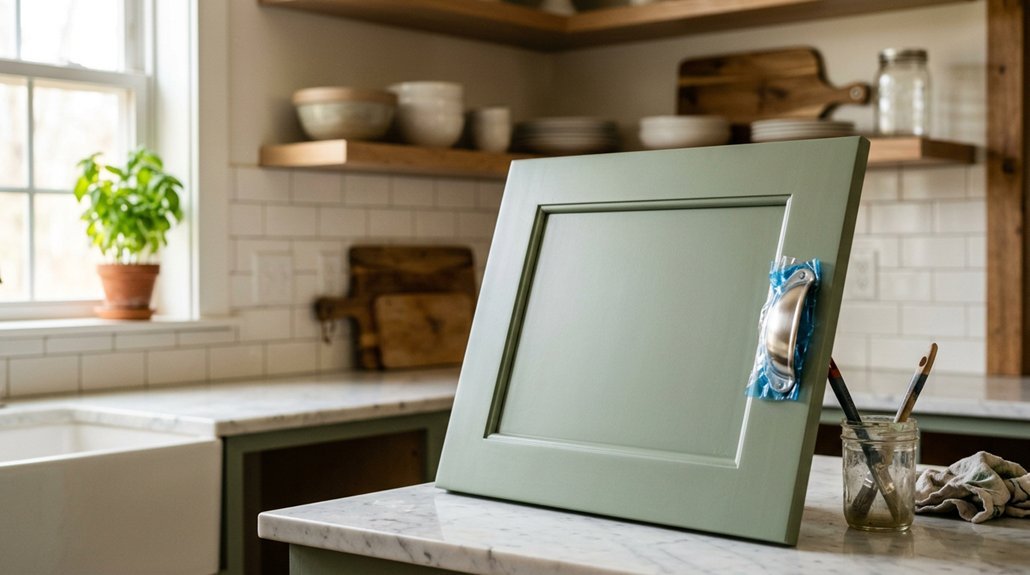
You want kitchen cabinets that look good in ten years, not ten months. That means ignoring trends and choosing construction, proportions, and finishes proven to last. Shaker cabinets dominate for good reason, but slab, inset, and overlay styles each solve specific problems you might face.
The real question isn’t which cabinet is “best.” It’s which type actually fits your space, your habits, and your willingness to maintain it.
What Makes Kitchen Cabinets Actually Timeless (Before You Choose)
Kitchen cabinets demand careful thought before you commit, because you’re not just buying storage, you’re anchoring a space you’ll live with for fifteen to twenty years.
Kitchen cabinets aren’t just storage—they’re a fifteen-to-twenty-year commitment to the space you live in every day.
Timeless design hinges on durable door styles and balanced proportions that outlast changing countertops and backsplashes. You’ll want a cabinet door style with clean, historically proven detailing, specifically a five-piece door construction like Shaker cabinets, which resist trend cycles better than ornate alternatives.
White cabinets in neutral colors, such as Benjamin Moore White Dove OC-17, create flexible canvases for future updates. Wood tones often look dated within five to ten years, as past decades proved with oak and graywashed finishes.
Even strong choices can look dated if surrounding finishes pull too trend-heavy, so evaluate the complete package: door profile, hardware, and styling together.
Why Shaker Cabinets Still Work in Almost Every Kitchen
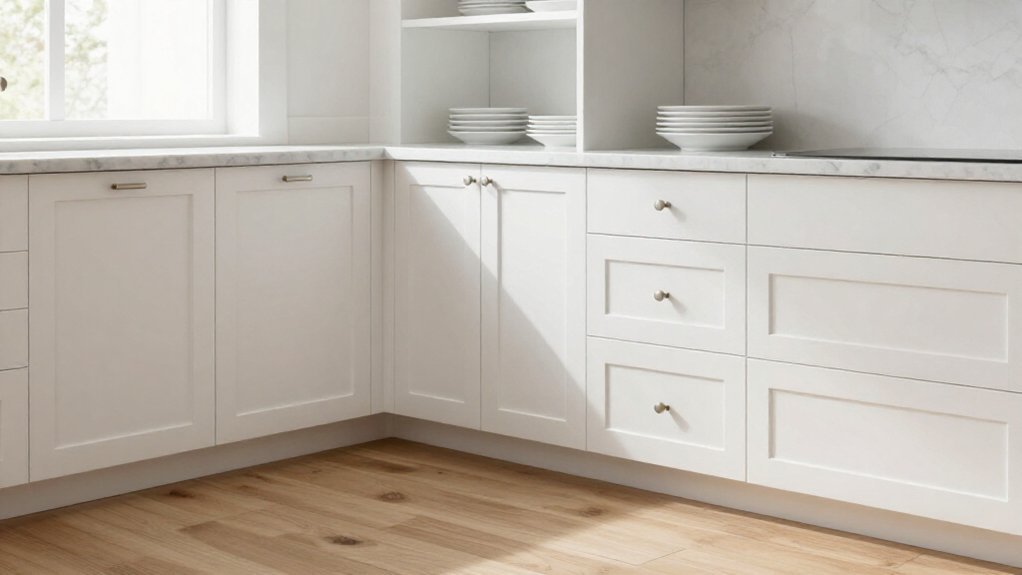
Since you’re investing in cabinetry that’ll anchor your kitchen for over a decade, you’ll want a door style that doesn’t buckle under shifting trends, and Shaker cabinets deliver exactly that durability.
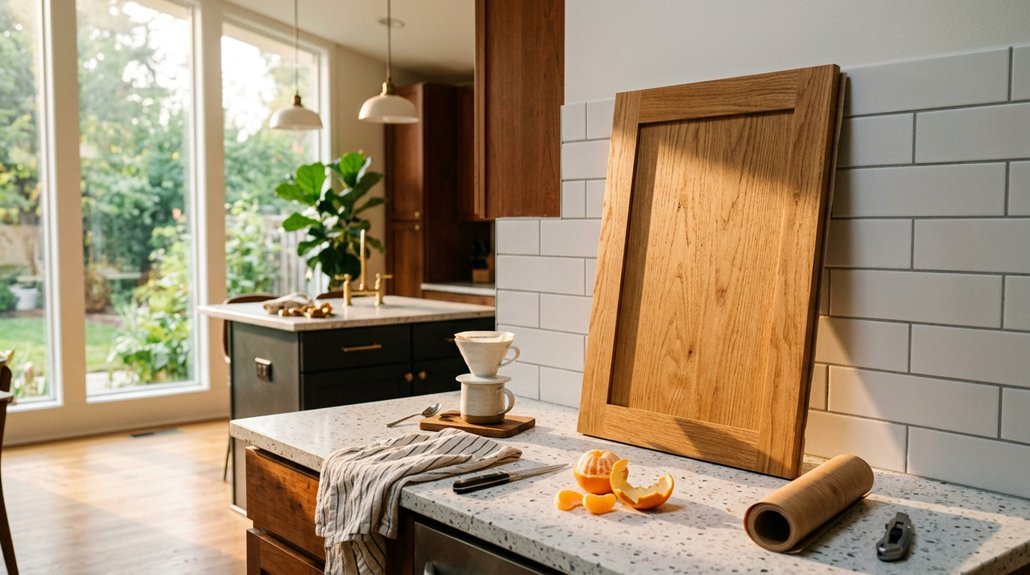
Shaker doors earn their lasting reputation through a five-piece construction featuring a recessed center panel with clean lines and square inside edges, free from ornamental excess that dates quickly. This adaptability spans modern kitchens and traditional Shaker aesthetics alike. You can specify white finishes, neutral paint, or natural wood without sacrificing cohesion.
Consider these advantages:
- The balanced proportions integrate with diverse styles, from Modern Farmhouse to Contemporary minimalism
- The simple frame accommodates frequent hardware and countertop updates
- The construction accepts stains ranging from light oak to deep charcoal
- The visual simplicity preserves value across multiple renovation cycles
Slim Shaker vs. Standard Shaker: Which Fits Your Space?
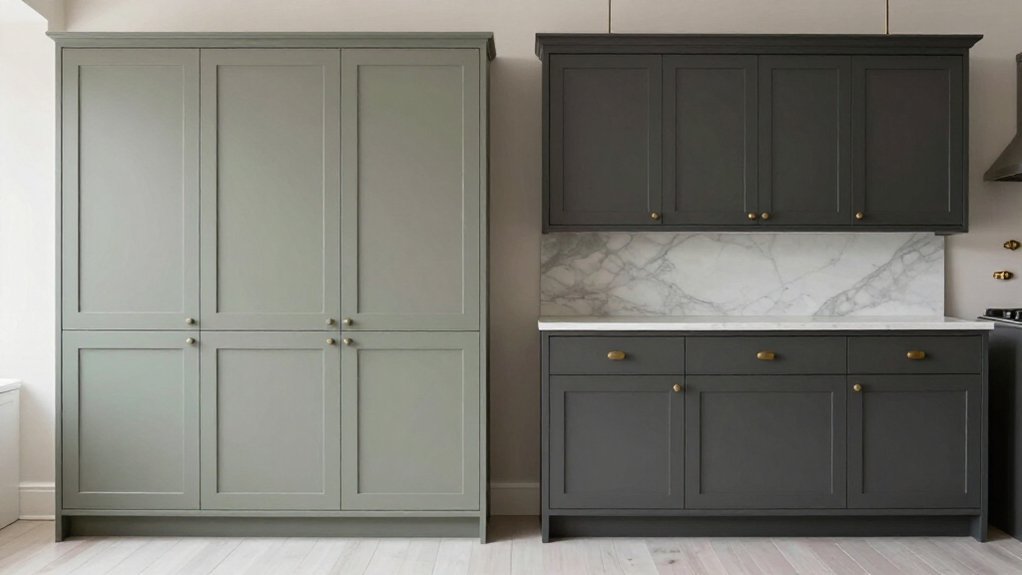
You’ll notice the visual width contrast immediately when you compare these two styles side by side, and this difference determines how well each blends with your chosen design era. Slim Shaker’s narrower rails, typically measuring 1.5 to 2 inches, suit contemporary spaces where you want subtle refinement without the starkness of slab doors. Standard Shaker‘s 2.5 to 3 inch rails anchor traditional or transitional kitchens with stronger shadow lines and furniture-like presence.
Consider the cost versus impact carefully, since both options occupy similar price brackets, but your selection will shape the room’s perceived scale and historical alignment for years to come.
Visual Width Contrast
Few design choices affect how expansive your kitchen feels quite like the width of your cabinet door frames, and you’re faced with a clear fork in the road: Slim Shaker’s delicate 1.5-inch rails and stiles, or Standard Shaker’s bolder 2.5-inch profile. You’re deciding between visual width contrast that opens your space or frames it with intention.
Slim Shaker reduces perceived trim bulk, so your door fields read wider, especially in white oak flat panel configurations.
Standard Shaker adds grounding weight, but can compress sightlines in tight quarters.
Full overlay doors amplify Slim Shaker’s uninterrupted look, while raised panels suit Standard’s structure. Your ceiling height and run length should guide you: compact rooms favor Slim Shaker’s lighter appeal, broader spaces accommodate Standard Shaker’s definition.
Design Era Blend
When you’re blending design eras in a single space, your cabinet frame width becomes a quiet but decisive signal, and you need to know which profile speaks your kitchen’s language.
Standard Shaker Door Styles use wider rails and stiles, giving your kitchen cabinet that classic furniture-like presence, and you’ll find this cabinet style anchors traditional and modern transitional kitchens with period-appropriate weight.
Slim Shaker narrows those same five-piece frames, stripping visual bulk for crisper, contemporary lines that suit open-concept layouts.
Both kitchen cabinets share material logic, but your ceiling height and trim scale should guide you: higher, ornate spaces favor standard Shaker, while lower-profile rooms benefit from Slim Shaker‘s lighter footprint. This design trends choice lets you bridge eras without abandoning Shaker’s enduring DNA.
Cost Versus Impact
How do you weigh a slimmer cabinet profile against your bottom line? In your kitchen remodel, you’ll find Slim Shaker cabinets carry a premium price, yet they deliver strong visual impact in compact or open-concept spaces. Standard Shaker offers baseline value with wider rails that anchor larger rooms in transitional style.
Consider these factors:
- Slim Shaker’s narrower stiles reduce visual weight, making small kitchens feel expansive.
- Standard Shaker’s substantial frame suits traditional cabinet design in spacious layouts.
- Both accept enduring cabinet color choices, from White Dove to natural wood finishes.
- Your cabinet selection hinges on spatial scale, not just material cost.
Choose Slim Shaker when clean lines justify the upgrade, or select standard for predictable pricing and classic flexibility.
When Slab Cabinets Are the Smarter Timeless Choice
You’ll find slab cabinets deliver a clean, restrained look through their completely flat, edge-to-edge doors, which eliminate frames, grooves, and ornamentation that could date your kitchen. Their material-centered design lets you highlight confident finishes like matte paint, high-gloss lacquer, or textured woodgrain surfaces that add warmth without visual clutter.
If you want cabinetry that adapts easily to future countertop or hardware changes, slab doors provide that flexibility because their unadorned surfaces never lock you into a specific decorative era.
Minimalist Aesthetic Appeal
Because slab cabinets present a completely flat surface from edge to edge, they deliver a simple, clean look that resists dating, and you can rely on their uninterrupted planes to avoid the grooves, frames, and ornamentation that eventually look tired. You will find this style stays fresh year after year because the doors remain completely flat, so popular colors and finishes carry the design rather than decorative details.
- Pair slab doors with frameless construction for a smooth perimeter that eliminates visual busyness.
- Choose matte or high-gloss paint finishes to maintain clean lines without added embellishment.
- Select wood grain veneers where straight, textured patterns add depth and character while preserving simplicity.
- Swap hardware and finishes later for a simple update without replacing cabinet structures.
Material Focus Design
Slab cabinets strip away every non-essential element, and this restraint lets the material itself become the entire design focus. When you choose slab doors, you’re selecting cabinet doors that eliminate recessed panels and ornamental detailing, so the surface remains uninterrupted and adaptable across decades.
You can achieve a lasting cabinet look by pairing slab doors with frameless construction and clean hardware lines that direct attention to material quality. Select a matte finish or carefully executed paint color, since smooth geometry exposes flaws and celebrates precision. If you prefer wood cabinets, control grain direction and texture consistency; subtle variation adds depth without dated ornamentation. This modern look resists trend cycles better than decorative profiles, making solid wood slab construction a smarter, enduring investment for contemporary kitchens.
Inset or Overlay: The Construction Decision That Outlasts Trends
Picture your kitchen cabinets as the frame around a photograph, where the construction method determines how that frame meets the image inside. You’re choosing between inset cabinets and overlay cabinets, and this construction decision shapes your kitchen’s lasting appeal.
Inset cabinets sit flush within the frame, their doors providing a clean, furniture-like precision that demands exact tolerances.
Overlay cabinets overlap the frame, offering easier installation and flexible styles that remain relevant with classic door designs. Both can age gracefully, but they speak different design languages: inset reads precise and traditional, while overlay feels casual and straightforward.
Consider these factors when you decide:
- Inset cabinets require tighter craftsmanship, which maintains consistent alignment over years of daily use.
- Overlay cabinets allow quicker, more standardized installation with fewer adjustment headaches.
- Construction details like reveals and hardware placement affect how current your kitchen looks.
- Either choice for homeowners works if you balance countertops, backsplashes, and finishes with care.
Which Wood Tones and Finishes Don’t Date
With wood cabinets, you’re selecting a surface that will face shifting tastes every five to ten years, so your finish choice carries more long-term weight than the species itself. For kitchen design that won’t look dated, you’ll want oak or maple cabinets with moderate grain and moderate stain, a pairing that reads as reasonably safe against aging your space.
You should avoid dark-stained wood, particularly those heavy 1970s–1980s browns that now feel anchored to their era. Skip orange-red hued oak from the 1990s too; that undertone marks itself as period-specific.
If you prefer modern, natural wood that won’t go out of style, choose rift-cut oak or other straight-lined, subtly grained selections, ideally on a simple panel door. You must balance these wood tones against bold colors or granite countertops elsewhere, since competing elements accelerate visual aging.
White, Off-White, or Gray: Picking Cabinet Colors That Last
Wood cabinets demand careful stewardship against shifting tastes, but painted finishes offer a different bargain entirely. You’ll find that white cabinets deliver the most enduring value, allowing homeowners maximum flexibility as tastes evolve. They blend well with countertops, backsplashes, and hardware swaps, and they appeal to the widest resale audience.
Consider these strategic selections:
- Choose Benjamin Moore White Dove (OC-17) for balanced warmth without starkness
- Select Benjamin Moore Chantilly Lace (OC-65) when you need brighter non-cold white
- Avoid Simply White and pure whites; their yellow cast limits longevity
- Use gray cabinet colors cautiously; surrounding finishes must prevent dated reads
Off-white and cream tones risk feeling trendy, not lasting. Create a lasting overall aesthetic by anchoring with warm-balanced whites rather than chasing temporary warmth.